VaguStim
by VaguStim
A non-invasive auricular vagus nerve stimulator that may help support autonomic nervous system regulation in Long COVID patients experiencing dysautonomia and POTS symptoms.
This page contains affiliate links. Dr. Groysman may receive a commission at no additional cost to you. Full disclosure.
Clinical Note
I recommend vagus nerve stimulation for my dysautonomia patients because the research is compelling. Auricular VNS has been shown to reduce antiautonomic autoantibodies and inflammatory cytokines while improving autonomic tone. For many of my Long COVID patients with POTS, this is a practical, well-tolerated tool they can use daily at home.
How It Works
The vagus nerve serves as the primary communication highway between the brain and the gut, heart, lungs, and immune system. Auricular stimulation may help support three important pathways:
Autonomic Rebalancing
tVNS may promote parasympathetic activity, counteracting the sympathetic overdrive common in Long COVID dysautonomia.
Inflammatory Modulation
The vagus nerve activates the cholinergic anti-inflammatory pathway, helping reduce pro-inflammatory cytokines like TNF-alpha and IL-6.
Autoantibody Reduction
Clinical research has shown that chronic tVNS was associated with reduction of antiautonomic autoantibodies linked to post-viral dysautonomia.
Non-Invasive Vagus Nerve Support for Autonomic Dysfunction
Long COVID frequently disrupts the autonomic nervous system, the internal wiring that controls heart rate, blood pressure, digestion, and temperature regulation. When this system malfunctions, patients experience a cluster of symptoms collectively known as dysautonomia: racing heart upon standing, blood pressure swings, chronic fatigue, and digestive problems.
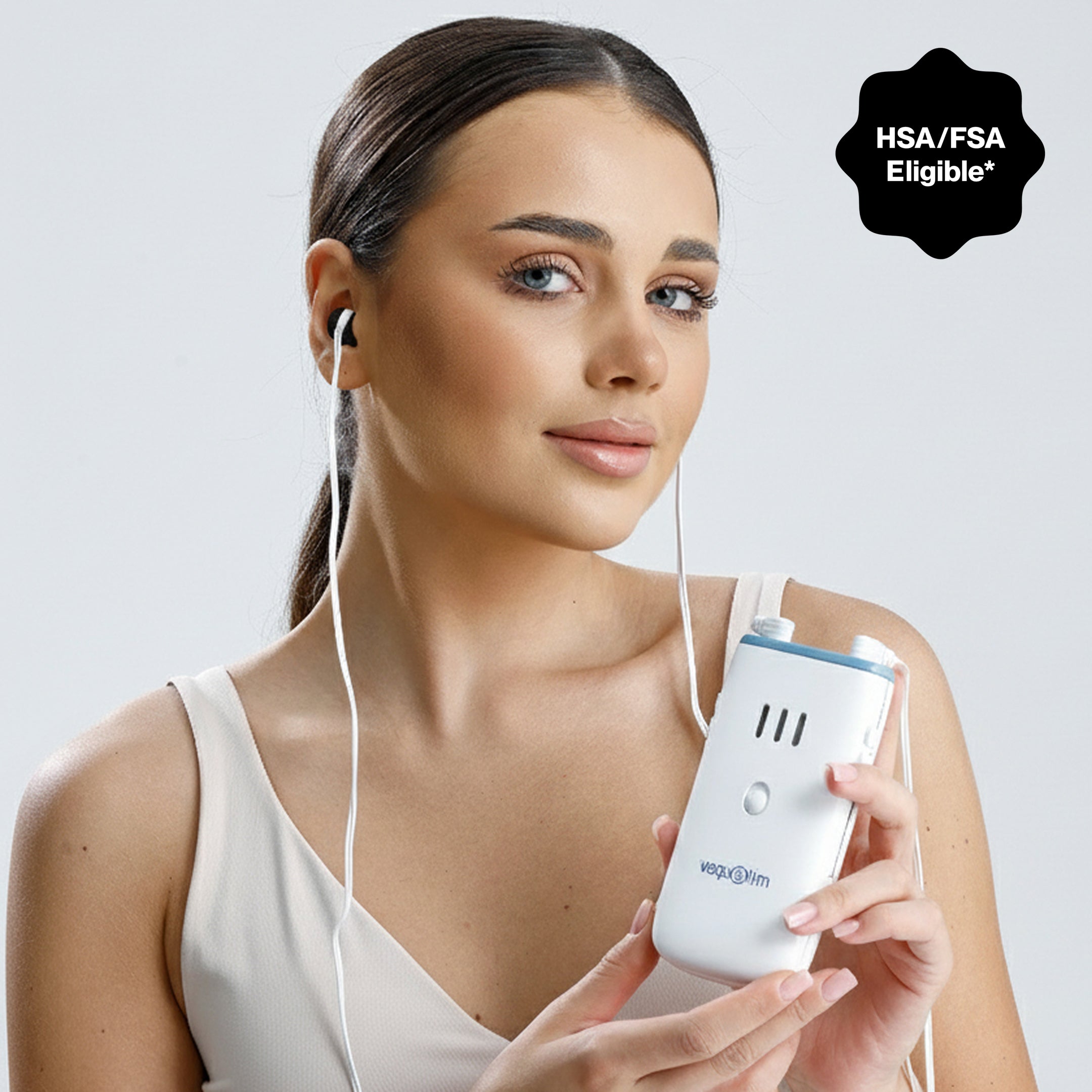
VaguStim is a Bluetooth-enabled, AI-powered auricular vagus nerve stimulation (tVNS) device. It delivers gentle electrical pulses through bilateral earsets placed on the tragus and concha of the ear, activating the auricular branch of the vagus nerve. The device pairs with iOS and Android apps to personalize stimulation parameters over time.
How It Works
The vagus nerve is the longest cranial nerve in the body. It runs from the brainstem to the abdomen and serves as the primary communication highway between the brain and the gut, heart, lungs, and immune system. In Long COVID, vagal tone is often impaired, contributing to the hyperadrenergic state seen in POTS and other dysautonomia presentations.
Transcutaneous auricular vagus nerve stimulation works by sending low-level electrical signals through the skin of the ear to activate vagal afferent fibers. These signals travel to the brainstem, where they influence the nucleus tractus solitarius, a key relay center for autonomic regulation.
VaguStim’s V2 platform also includes EMDR-style bilateral activation sessions designed to support emotional regulation and stress response, which are often dysregulated alongside autonomic function.
Clinical Evidence
The research base for auricular vagus nerve stimulation in dysautonomia is growing. Several key studies are directly relevant to Long COVID patients:
Randomized Clinical Trial: tVNS in POTS (JACC: Clinical Electrophysiology, 2023) A sham-controlled, double-blind randomized trial enrolled 26 women with POTS. Active stimulation was delivered at 20 Hz to the tragus for 1 hour daily over 2 months. The active group showed significant reduction in orthostatic tachycardia compared to sham. The study also found decreased beta-1 and alpha-1 adrenergic receptor autoantibodies, improved cardiac autonomic function, and decreased serum inflammatory cytokines. The authors concluded that tVNS represents a low-cost, low-risk intervention that may result in significant amelioration of POTS.
14-Day tVNS Protocol for Dysautonomia A separate study using 14 days of transcutaneous auricular vagus stimulation found reduced dysautonomia symptoms and improved autonomic markers in participants. Measurable changes in autonomic function were detectable within the 14-day treatment window.
Cholinergic Anti-Inflammatory Pathway Research Multiple studies have demonstrated that vagus nerve stimulation activates the cholinergic anti-inflammatory pathway, reducing production of pro-inflammatory cytokines including TNF-alpha and IL-6. These cytokines remain elevated in many Long COVID patients and contribute to ongoing symptom burden.
The VaguStim device platform (including its predecessor model) has been used in over 40 independent peer-reviewed research studies. The V2 AI algorithm is built on insights from over 600 published scientific studies on vagus nerve stimulation.
Why Dr. Groysman Recommends VaguStim
Dr. Groysman, a board-certified physician who treats Long COVID patients at COVID Institute, recommends VaguStim based on both the clinical evidence and his experience with patients.
“The autonomic nervous system is central to many of the symptoms my Long COVID patients struggle with most. Heart rate spikes, temperature swings, digestive issues, fatigue. Vagus nerve stimulation addresses the root mechanism rather than masking individual symptoms. The published research on auricular VNS in POTS is encouraging. One randomized clinical trial found that tVNS reduced orthostatic tachycardia in women with POTS while improving autonomic, inflammatory, and immunologic markers. VaguStim makes this accessible for daily home use, and the device has been used in over 40 research studies.”
He considers VaguStim particularly useful as part of a broader treatment plan that may include autonomic reconditioning, anti-inflammatory support, and lifestyle modifications.
Who May Benefit
VaguStim may be appropriate for Long COVID patients who experience:
- Postural Orthostatic Tachycardia Syndrome (POTS) or other forms of dysautonomia
- Elevated resting heart rate or heart rate spikes with position changes
- Chronic fatigue that does not improve with rest alone
- Digestive problems linked to autonomic dysfunction
- Temperature dysregulation (excessive sweating, cold extremities)
- Difficulty with stress regulation or heightened fight-or-flight responses
VaguStim is a non-invasive device. However, patients should consult their physician before use, especially those with cardiac implants, epilepsy, or active cardiac arrhythmias.
Ready to explore vagus nerve stimulation?
View on VaguStimDevice Specifications
What's Included
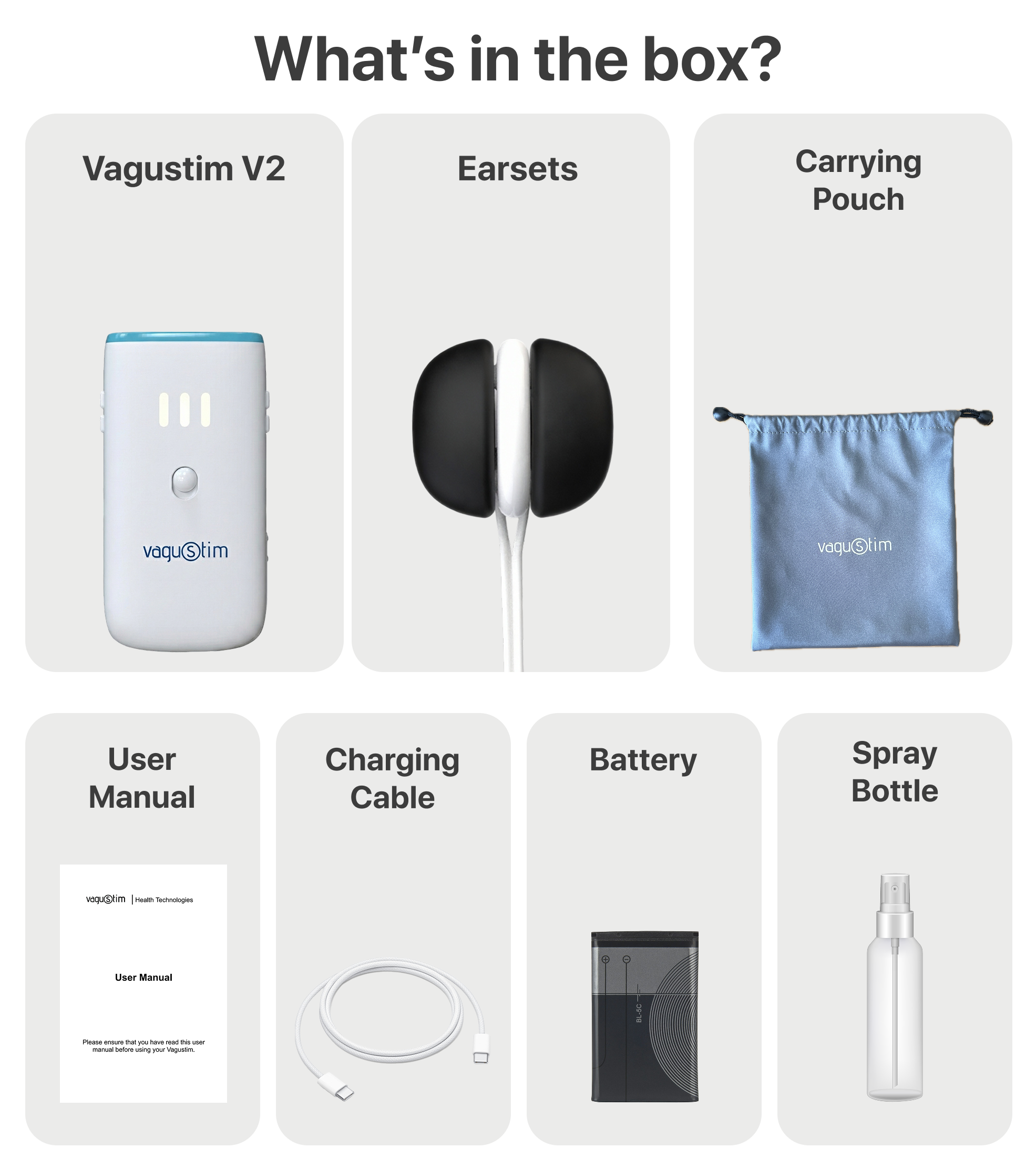
VaguStim V2 device, bilateral earsets with 3 size adjusters, USB-C charging cable, companion app (iOS/Android).
Frequently Asked Questions
What is vagus nerve stimulation?
How does VaguStim deliver stimulation?
Is VaguStim FDA cleared?
How long does each session take?
When might I notice changes?
Are there side effects?
Can I use VaguStim alongside other treatments?
How is VaguStim different from other vagus nerve stimulators?
Does insurance cover VaguStim?
Is there research supporting VNS for Long COVID and POTS?
This product is not intended to diagnose, treat, cure, or prevent any disease. Individual results may vary.